Real Estate Tokenization: Complete 2026 Guide & Platform Solutions
Real estate tokenization democratizes access to the $280 trillion global property market through blockchain technology, enabling fractional ownership, automated management, and enhanced liquidity - with the current Stobox stack (Intelligence, Raisable, Compass) covering the record, the raise and the issuance at flat fees.
The short answer
Real estate tokenization is issuing digital tokens that represent interests in the company that owns a property, usually a special-purpose vehicle (SPV), rather than the deed itself. In most markets those tokens are securities: the offering needs an exemption matched to its investors, a licensed broker-dealer runs any regulated sale, and the token’s transfer rules check who may hold it. The exceptions are few and specific: Dubai’s land registry has tokenized actual title deeds since March 2025, and Switzerland’s DLT Act lets a token be the share itself.
The six steps, from a clean property record to an operating asset, are in how to tokenize real estate, step by step. How Stobox works as a real estate tokenization company, with flat fees and never a percentage of the raise, is on the real estate page. Stobox is not a broker-dealer, investment adviser, custodian or law firm.
The guide below was first published on 1 August 2025 and substantively updated on 13 September 2026: the retired platform sections were replaced with the current Stobox stack, and the market and regulatory figures are as of mid-2026.
Real estate tokenization transforms property ownership into digital tokens, enabling fractional access to premium properties that traditionally required hundreds of thousands in capital for full ownership participation.

The real estate landscape is undergoing a fundamental transformation through blockchain technology. For decades, premium property access has been exclusive to wealthy individuals and institutions who could afford minimum participation of $500,000 or more. Today, real estate tokenization platforms are democratizing access to luxury properties worldwide.
New Access A $50 million Manhattan office building can now be divided into 500,000 tokens at $100 each, making premium real estate accessible to participants globally.
Real estate tokenization converts property ownership rights into digital tokens on blockchain networks. Each token represents a specific percentage of ownership in the underlying property, similar to how company shares represent business ownership. This process enables participants to acquire fractional shares of expensive properties, access global real estate markets, and manage their holdings through digital platforms.
Market Reality Check Major projects like the $30 million Manhattan luxury condo tokenization and the €6.5 million Paris villa demonstrate that high-value real estate tokenization is not just theoretical – it's happening now.
The technology has moved beyond experimental phases into successful real-world applications. Property tokenization case studies show projects worth hundreds of millions being fractionalized into accessible participation units. From luxury condominiums in Manhattan to heritage preservation projects in Germany, tokenization is creating new opportunities for both property owners seeking capital and participants wanting portfolio diversification.
Whether you're a real estate developer looking to configure token offerings, a participant seeking portfolio diversification, or simply curious about the future of property ownership, understanding real estate tokenization is essential for navigating tomorrow's landscape. With platforms offering comprehensive tokenization services that handle everything from technical structuring to secondary market integrations, the infrastructure for tokenized real estate is already operational.
What is Real Estate Tokenization?
Real estate tokenization is the process of converting ownership rights in physical properties into digital tokens that exist on a blockchain. Instead of holding traditional paper deeds or physical certificates, participants own digital tokens that represent legally-backed ownership stakes in real estate assets.
Core Concept Each token serves as a digital certificate of ownership stored on blockchain. When you own tokens representing real estate, you have legal rights to proportional rental distributions, property appreciation, and voting on major decisions.
The fundamental process involves creating a digital representation of property ownership through smart contracts – self-executing contracts with terms directly written into code. These smart contracts automatically handle token transfers, distribution automation, and ownership records without requiring traditional intermediaries like banks, brokers, or transfer agents.
This transformation addresses critical limitations in traditional real estate participation. How real estate asset tokenization works demonstrates how blockchain technology creates immutable ownership records, enables fractional participation, and provides transparent transaction histories that build trust between participants and property managers.
Key Differences from Traditional Real Estate:
Traditional Real Estate Limitations:
- Minimum participation requirements typically exceed $200,000
- Geographic constraints limit access to local markets only
- Transaction completion requires 60-90 days of processing time
- Combined transaction fees range from 5-7% of property value
- Trading restricted to standard business hours and market availability
- Complex paperwork and manual processes create delays and errors
Tokenized Real Estate Advantages:
- Minimum participation starts from $100, democratizing access
- Global market access eliminates geographic investment barriers
- Digital transactions complete within minutes to hours
- Streamlined processes reduce fees to 1-2% through automation
- Potential for 24/7 trading through digital marketplace infrastructure
- Automated smart contracts eliminate manual paperwork and human error
Modern tokenization platforms like Stobox utilize advanced protocols including STV3 (Security Token Version 3) that ensure regulatory compliance while maintaining the efficiency benefits of blockchain technology. These platforms support multiple blockchain networks, automated compliance monitoring, and comprehensive participant management systems.
⚖️ Legal Framework Tokenized real estate typically qualifies as securities, subjecting them to regulatory requirements including participant verification, disclosure obligations, and ongoing compliance monitoring through automated systems.
The legal structure usually involves establishing Special Purpose Vehicles (SPVs) that own the underlying properties and issue tokens to participants. This structure protects both property owners and token holders by creating clear legal boundaries and limiting liability exposure while ensuring proper regulatory compliance.
The Traditional Real Estate Problem
Traditional real estate participation faces fundamental barriers that exclude most potential participants from lucrative property markets. Understanding these limitations reveals why tokenization represents such a significant advancement for both property owners and participants seeking real estate exposure.

High Capital Requirements
Real estate participation typically requires substantial upfront capital that most individuals cannot afford. Purchasing property demands $100,000 to $500,000 or more in initial capital, plus additional funds for maintenance, taxes, and unexpected expenses. This high barrier excludes approximately 90% of potential participants from direct real estate ownership.
Even real estate funds often require significant minimum participation for institutional-quality properties. Private funds targeting premium assets frequently set minimums at $25,000 to $100,000, while the best opportunities remain exclusive to accredited participants with substantial net worth requirements.
Geographic and Market Limitations
Traditional real estate participation constrains participants to properties within their local markets or regions they can easily visit and manage. This geographic limitation prevents portfolio diversification across different real estate markets, economic conditions, and currency exposures.
International real estate participation involves complex legal procedures, foreign exchange risks, tax implications, and local regulatory requirements that make cross-border property ownership impractical for most individual participants. Even domestic participation outside one's immediate area presents challenges in due diligence, property management, and ongoing oversight.
Illiquidity and Long Transaction Times
Real estate ranks among the most illiquid asset classes, with transactions typically requiring 30-90 days to complete. Property owners cannot quickly access their capital when financial needs arise, making real estate unsuitable for participants who may need liquidity on short notice.
Transaction costs further compound liquidity problems. Traditional real estate sales involve 5-7% in combined fees including real estate agent commissions, legal fees, title insurance, and transfer taxes. These high costs make frequent trading impractical and force participants to maintain positions longer than desired.
Complex Administrative Processes
Real estate transactions require extensive documentation, multiple intermediaries, and lengthy approval processes. Buyers must navigate financing approvals, property inspections, title searches, legal reviews, and regulatory compliance procedures that create opportunities for delays and additional costs.
Property management adds ongoing administrative complexity including tenant relations, maintenance coordination, tax reporting, and compliance with local regulations. These responsibilities often require professional property management services that reduce net distributions for participants.
Limited Transparency and Information Access
Traditional real estate markets suffer from information asymmetries where sellers often have significantly more knowledge about property conditions, market trends, and potential than buyers. Property histories, previous transactions, and ownership records are frequently scattered across multiple databases and not easily accessible.
Financial performance data for comparable properties is often unavailable or unreliable, making accurate valuations difficult for individual participants. This information gap creates risks and reduces confidence in decisions, particularly for properties outside participants' immediate geographic knowledge.
How Tokenization Solves These Problems
Real estate tokenization addresses each traditional barrier through innovative blockchain technology and comprehensive platform solutions. Understanding these solutions demonstrates why tokenization is rapidly gaining adoption among both institutional and retail participants seeking real estate exposure.
Fractional Ownership Revolution
Tokenization breaks expensive properties into accessible participation units through digital fractionalization. Instead of requiring $500,000 to purchase an entire property, participants can buy tokens representing fractional ownership starting from $100 or less, democratizing access to premium real estate markets.
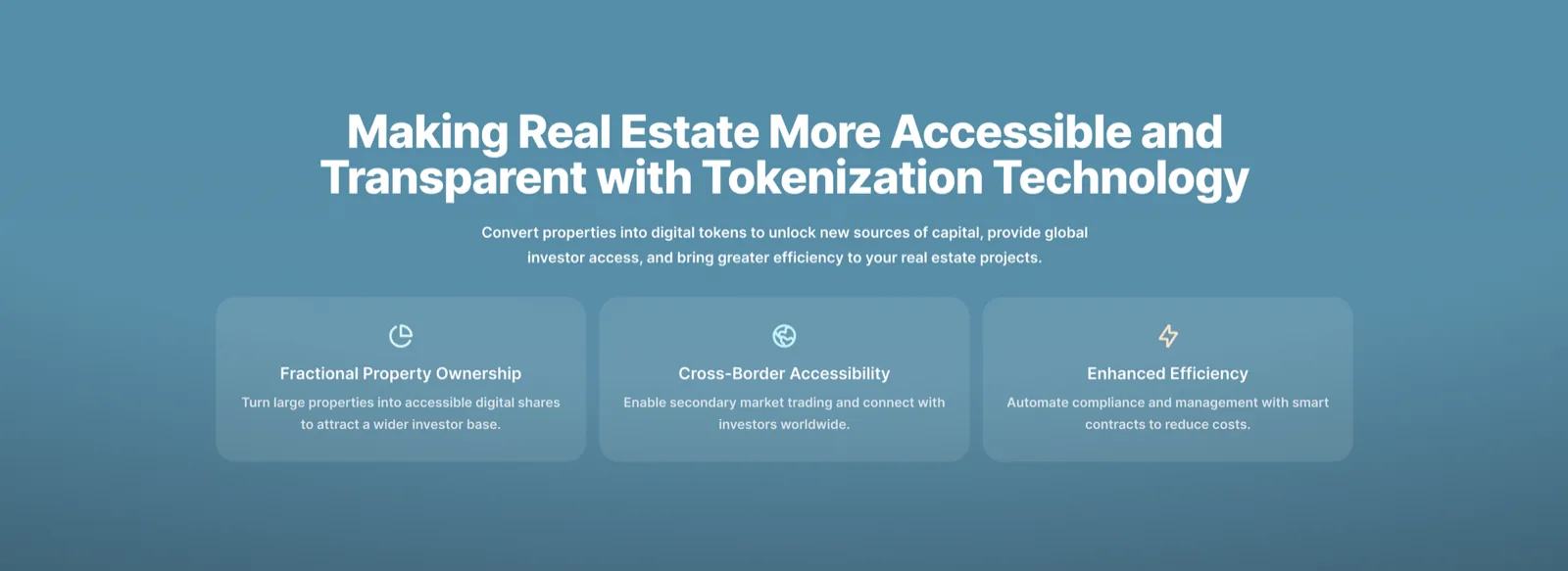
Participation Accessibility A $10 million commercial property divided into 100,000 tokens enables participation starting at $100 per token, making luxury real estate accessible to teachers, young professionals, and small portfolio managers worldwide.
This fractional model enables superior portfolio diversification strategies. Rather than concentrating $100,000 in a single local property, participants can spread holdings across multiple tokenized properties in different markets, asset classes, and geographic regions, significantly reducing concentration risk while accessing premium real estate opportunities.
Modern asset tokenization platforms provide sophisticated portfolio management tools that help participants optimize their fractional holdings across diverse tokenized assets, including automated rebalancing features and performance analytics that rival institutional-grade systems.
Global Market Access and 24/7 Trading
Blockchain technology eliminates geographic constraints by enabling participants worldwide to participate in international real estate markets. A participant in Tokyo can easily own tokens representing properties in New York, London, or Dubai without dealing with international banking complexities or local regulatory barriers.
⚡ Trading Efficiency Digital marketplaces operate continuously, allowing participants to buy and sell tokenized real estate positions within minutes rather than waiting months for traditional property transactions.
Tokenized real estate can potentially trade on digital platforms around the clock, providing unprecedented liquidity compared to traditional property participation. While actual liquidity depends on market demand and regulatory frameworks, the infrastructure for continuous trading creates opportunities for more dynamic portfolio management.
Advanced platforms support multiple fiat currencies and payment methods, making global participation accessible to participants from different financial backgrounds. Integration with traditional banking systems and emerging payment rails reduces friction for international participants seeking real estate exposure.
Automated Processes and Smart Contracts
Smart contracts eliminate many intermediaries by automatically executing processes that traditionally required manual intervention. Rental distribution automation, voting rights, profit sharing, and compliance monitoring execute automatically based on predefined conditions, reducing administrative costs and human error.
Automation Benefits Smart contracts can automatically distribute rental income to token holders monthly, reinvest profits based on predetermined criteria, or trigger asset sales when specific performance metrics are met – all without human intervention.
These automated features enable more sophisticated structures through programmable logic. For example, tokenized real estate projects can automatically reinvest rental income, distribute profits based on token holdings, or adjust management fees based on property performance, creating dynamic vehicles that adapt to market conditions.
Comprehensive platforms provide automated compliance monitoring, regulatory reporting, tax documentation, and cross-border payment processing, significantly reducing operational burden for both issuers and participants while maintaining full regulatory compliance through real-time monitoring systems.
Enhanced Transparency and Trust
Blockchain technology creates immutable records of all property transactions, ownership changes, and financial distributions. This transparency builds trust between participants and property managers by providing verifiable proof of all financial activities through publicly accessible blockchain records.
️ Transparency Benefits Every token holder can view complete history including purchase dates, rental income received, property valuations, and management decisions through blockchain records that cannot be altered or falsified.
This level of transparency is impossible with traditional real estate participation, where financial information is often limited to quarterly reports and difficult to verify independently. Blockchain records provide real-time access to performance data and property management activities.
Advanced platforms integrate Internet of Things (IoT) sensors and satellite monitoring with tokenized assets, creating real-time asset tracking and automated performance measurement that provides unprecedented visibility into property conditions and market performance.
Reduced Costs and Improved Efficiency
Smart contracts reduce transaction costs by eliminating multiple intermediaries including brokers, transfer agents, clearinghouses, and traditional escrow services. While traditional real estate transactions involve 5-7% in combined fees, tokenized transfers can reduce costs to 1-2% or less through streamlined digital processes.
Cost Savings Eliminating traditional intermediaries and manual processes can reduce real estate transaction costs by 60-80%, making smaller participation economically viable and improving overall outcomes for participants.
These cost savings make micro-participation strategies economically viable, enabling portfolio diversification strategies that were previously impractical due to high transaction fees. Lower costs also improve overall performance by reducing the drag of fees and expenses on portfolio performance.
Multi-blockchain support allows platforms to optimize costs by selecting the most appropriate network for each transaction type, whether prioritizing low fees, fast settlement, or specific regulatory requirements, maximizing efficiency while maintaining security and compliance.
Who Benefits from Real Estate Tokenization
Real estate tokenization creates value across diverse market participants, from individual property developers to institutional fund managers and technology platforms. Understanding how different stakeholders benefit reveals the comprehensive ecosystem that tokenization enables through advanced platform solutions.
Real Estate Funds and Asset Managers
Private real estate funds and asset managers gain significant advantages through tokenization that address traditional limitations in fund liquidity and participant access. Fund managers can offer more flexible redemption terms, automated distribution mechanisms, and enhanced transparency to limited partners through blockchain-based reporting systems.
Fund Innovation Benefits Tokenization enables creation of entirely new fund structures with granular ownership tracking and automated management features that reduce operational overhead while improving participant experience and fund accessibility.
Traditional real estate funds face liquidity constraints where participants must wait years for fund distributions or face penalties for early withdrawal. Tokenized fund structures can provide secondary market trading opportunities for fund interests, enabling limited partners to exit positions before planned fund termination dates.
How asset managers benefit from tokenization demonstrates how blockchain technology creates hybrid fund structures that combine traditional real estate expertise with enhanced liquidity and operational efficiency through automated systems.
Fund tokenization also enables smaller fund sizes to be economically viable by reducing administrative costs and enabling fractional fund interests that attract smaller institutional participants and family offices previously excluded from private real estate funds.
Family Offices and High-Net-Worth Individuals
Family offices benefit from tokenization through improved estate planning capabilities, enhanced asset liquidity, and sophisticated governance mechanisms that enable better wealth management across generations. Tokenization creates opportunities for family members to diversify holdings while maintaining exposure to family real estate assets.
👩👦👦 Generational Wealth Management Tokenized family real estate enables younger family members to gradually acquire ownership interests in family properties while older generations can monetize portions of assets without complete divestiture.
Estate planning benefits include simplified inheritance processes through blockchain-based ownership records, automated succession planning through smart contracts, and reduced probate complexity for tokenized assets that transfer according to predetermined rules.
Family governance improvements through tokenization include democratic voting mechanisms for property decisions, transparent financial reporting accessible to all family members, and automated distribution of rental income or property appreciation gains according to ownership percentages.
Liquidity benefits enable family office diversification strategies where families can maintain real estate exposure while accessing capital for other opportunities, family business initiatives, or philanthropic activities through partial tokenization of family properties.
PropTech Companies and Technology Platforms
Property technology companies can integrate tokenization capabilities into existing platforms to offer enhanced services including fractional ownership, automated property management, and blockchain-based transaction processing that differentiates their offerings in competitive markets.
Platform Integration Opportunities PropTech platforms can use white-label tokenization solutions to offer clients advanced capabilities without developing blockchain expertise internally, accelerating time-to-market for enhanced platform features.
API integration opportunities enable existing property management software, asset management platforms, and real estate marketplaces to incorporate tokenization features directly into current workflows while maintaining familiar user experiences for existing clients.
B2B partnership opportunities include collaboration with tokenization platforms to offer comprehensive solutions that combine traditional real estate expertise with advanced blockchain capabilities, creating competitive advantages through technological innovation.
Revenue model enhancement through tokenization includes transaction fee opportunities, premium service offerings for tokenized properties, and new SaaS revenue streams from blockchain-based property management and participant relations tools.
Institutional Asset Managers and Pension Funds
Large institutional asset managers including pension funds, insurance companies, and endowments gain access to previously illiquid real estate markets through tokenization while maintaining fiduciary responsibilities and risk management requirements through institutional-grade platforms.
Institutional Benefits Pension funds can participate in smaller real estate assets and achieve greater geographic diversification while maintaining appropriate due diligence standards and regulatory compliance through professional tokenization platforms.
Portfolio management improvements include enhanced liquidity for real estate allocations, automated reporting and compliance monitoring, and integration with existing institutional asset management systems through comprehensive APIs and reporting tools.
Risk management benefits through tokenization include improved diversification across smaller asset sizes, enhanced transparency through blockchain records, and automated compliance monitoring that reduces operational risks associated with traditional real estate asset management.
ESG (Environmental, Social, Governance) benefits include transparent impact reporting for sustainable real estate assets, automated measurement of environmental metrics, and enhanced governance through blockchain-based voting and decision-making processes.
International Participants and Cross-Border Access
International participants benefit from simplified access to foreign real estate markets without traditional complications of international property ownership including complex legal structures, local banking relationships, and regulatory compliance requirements.
Global Access Benefits Currency diversification opportunities enable participants to gain exposure to different real estate markets and currencies through tokenized assets while maintaining simplified tax reporting and regulatory compliance.
Regulatory compliance simplification through professional platforms reduces barriers to international real estate participation by handling cross-border regulatory requirements, tax optimization, and participant verification processes through automated compliance systems.
Geographic diversification becomes accessible to smaller participants who can build international real estate portfolios through fractional ownership of premium properties in multiple countries, reducing concentration risk while accessing global real estate markets.
Participation efficiency improvements include reduced transaction costs for international participation, simplified currency conversion and payment processing, and automated distribution of international rental income through blockchain-based payment systems.
The Promise: Benefits of Real Estate Tokenization
Real estate tokenization delivers transformative advantages that address fundamental limitations in traditional property participation markets. These benefits create new opportunities for both sophisticated institutional participants and retail participants seeking real estate exposure through innovative blockchain-based solutions.
Democratized Access
Tokenization removes traditional gatekeepers from real estate markets by reducing minimum participation requirements from hundreds of thousands to hundreds of dollars. This democratization enables middle-class participants to access premium real estate opportunities that were previously exclusive to wealthy individuals and institutions.
🌍 Global Participation A retail participant in Poland can own tokens representing luxury Manhattan real estate or commercial properties in Singapore, expanding opportunities beyond local markets through comprehensive multi-jurisdictional compliance.
This expanded access creates larger participant pools for real estate projects, potentially improving valuations for property owners while providing participants with unprecedented diversification opportunities. Professional tools typically available only to institutional participants become accessible to retail participants through advanced tokenization platforms.
The removal of geographic barriers enables participants to build globally diversified real estate portfolios that provide exposure to different economic cycles, currency fluctuations, and market dynamics, reducing overall portfolio risk while maximizing potential through strategic asset allocation.
Enhanced Liquidity Potential
While tokenization doesn't automatically guarantee liquidity, it creates infrastructure for more efficient trading compared to traditional real estate transactions. Digital marketplaces can operate with lower transaction costs and faster settlement times, making position adjustments more practical when market conditions change.
Efficiency Improvements Secondary market trading platforms enable token transactions in minutes rather than months, providing participants with flexibility to respond to changing financial needs or market opportunities.
Advanced platforms integrate with decentralized finance (DeFi) protocols, enabling token holders to use their real estate holdings as collateral for loans while maintaining ownership exposure. This innovation provides liquidity without requiring asset sales, creating new financial strategies previously impossible with traditional real estate.
Market-making mechanisms and liquidity pools help ensure continuous buying and selling opportunities, while cross-platform compatibility maximizes trading venues and participant access. However, actual liquidity development requires sufficient market participation and may take time to mature for newer asset classes.
Automated Management and Governance
Smart contracts enable sophisticated property management automation that reduces costs while improving efficiency and transparency. Automated systems can handle rent collection, expense payments, profit distribution, and compliance monitoring without manual intervention, reducing operational overhead and human error.
🤖 Smart Automation Tokenized properties can automatically collect rent, pay operating expenses, distribute profits to token holders, and generate comprehensive financial reports – all executed through programmable smart contracts.
Governance mechanisms allow token holders to participate in major property decisions through blockchain-based voting systems. Participants can vote on property improvements, management changes, or sales decisions proportional to their token holdings, providing democratic control over decisions.
These automated features scale efficiently across multiple properties and thousands of participants, making professional property management economically viable for smaller assets that couldn't previously support comprehensive management services through traditional approaches.
Improved Risk Management
Fractional ownership enables superior diversification strategies that reduce concentration risk compared to traditional real estate participation. Instead of concentrating $200,000 in a single property, participants can spread exposure across multiple tokenized assets in different markets, property types, and geographic regions.
🛡️ Risk Mitigation Portfolio diversification across 20 different tokenized properties reduces the impact of any single asset's poor performance, while exposure to different markets provides protection against local economic downturns.
Advanced platforms provide comprehensive risk assessment tools including property analytics, market trend analysis, and portfolio optimization features that help participants make informed decisions about asset allocation and risk exposure through data-driven insights.
Real-time performance monitoring and automated reporting enable proactive risk management, while blockchain-based transparency ensures participants have complete visibility into property operations and financial performance through immutable record-keeping.
Cost Efficiency and Improved Outcomes
Reduced transaction costs through smart contract automation improve net outcomes for participants while making smaller participation economically viable. Lower barriers to entry and reduced fees create opportunities for more dynamic trading strategies and portfolio optimization.
💰 Outcome Enhancement Eliminating traditional intermediaries can reduce costs by 3-5% per transaction, directly improving participant outcomes while enabling more frequent portfolio adjustments when beneficial.
Automated administrative processes reduce ongoing management costs, enabling higher net income distribution to token holders. Efficiency improvements benefit both property owners seeking capital and participants seeking outcomes through streamlined operations.
Global participant access can improve property valuations by expanding the pool of potential buyers, while 24/7 trading capabilities enable participants to capitalize on market opportunities and optimize exit timing for maximum outcomes.
The Reality Check: Challenges and Risks
While real estate tokenization offers significant opportunities, it also presents substantial challenges that must be carefully understood and addressed. Recognizing these risks enables informed decision-making and proper risk management for both issuers and participants participating in tokenized real estate markets.
Regulatory Complexity and Uncertainty
Real estate tokenization operates in a complex regulatory environment where securities laws vary significantly between jurisdictions. Tokenized real estate typically qualifies as securities, subjecting projects to strict compliance requirements including participant accreditation, disclosure obligations, and ongoing reporting responsibilities.
⚠️ Regulatory Reality Regulatory changes can dramatically impact existing tokenization projects. New rules might require additional compliance measures, restrict participant categories, or prohibit specific tokenization structures entirely.
Different countries maintain varying rules about foreign property ownership, token trading, and participant protection standards. This regulatory fragmentation creates compliance challenges for projects seeking global participant access while maintaining legal compliance across multiple jurisdictions.
However, leading platforms address regulatory uncertainty through proactive compliance strategies and comprehensive legal frameworks. The Stobox platform features built-in regulatory intelligence that tracks changes across multiple jurisdictions and automatically updates compliance requirements, ensuring projects remain compliant as regulations evolve.
Professional regulatory guidance and compliance support helps navigate complex requirements effectively while maintaining participant protection standards and regulatory compliance throughout the project lifecycle.
Technology and Security Risks
Smart contract vulnerabilities represent persistent threats to tokenized assets. Programming errors, inadequate security audits, or unforeseen attack vectors can result in permanent loss of funds or unauthorized token transfers. Unlike traditional finance, blockchain transactions are typically irreversible, making security paramount for participant protection.
🔒 Security Challenges Custody and key management present additional risks. Participants must secure private keys while issuers need robust security for administrative functions. Human error or compromised security can lead to irreversible losses.
Advanced tokenization platforms have revolutionized security through innovative technologies that exceed traditional financial security standards. Multi-Party Computation (MPC) technology ensures private keys are never stored in single locations, dramatically reducing security risks while maintaining user control.
Comprehensive security audits, formal verification processes, and real-time monitoring systems provide continuous security oversight. Insurance options and institutional-grade custody solutions protect against potential losses through professional risk management frameworks that address both technical and operational security concerns.
Market Liquidity Limitations
Despite tokenization's promise of improved liquidity, many tokenized real estate assets still struggle with limited trading volumes and wide bid-ask spreads. Creating genuine liquidity requires sufficient market participants, which can take years to develop for newer asset classes.
📊 Liquidity Reality Regulatory restrictions often limit eligible traders, constraining liquidity development. Transfer restrictions, holding periods, and participant qualification requirements prevent the free trading necessary for robust secondary markets.
However, advanced platforms address liquidity challenges through comprehensive market development strategies and automated liquidity provision systems. Integrated market-making tools, liquidity pools, and cross-platform trading capabilities enhance liquidity across multiple venues while maintaining regulatory compliance.
Multi-blockchain support enables tokens to access liquidity across different networks, maximizing trading opportunities while automated market-making mechanisms provide continuous buying and selling opportunities even during periods of lower natural trading volume.
Information Asymmetry and Due Diligence
Participating in tokenized real estate often requires trusting property managers and platforms to provide accurate information about asset conditions, rental income, and market valuations. Participants may have limited ability to conduct independent due diligence on distant properties, particularly international assets.
🔍 Due Diligence Challenges Property management quality directly affects token value, but token holders typically have minimal control over management decisions. Poor maintenance, tenant relations, or financial management can significantly impact outcomes.
Leading platforms address information asymmetry through comprehensive transparence tools and standardized reporting requirements. Real-time property monitoring, automated financial reporting, and blockchain-based documentation provide participants with unprecedented visibility into property operations and performance.
Advanced due diligence tools including satellite monitoring, IoT sensors, and third-party verification services help participants assess property conditions and market valuations independently, reducing reliance on issuer-provided information while maintaining transparency.
Integration and Operational Complexity
Most real estate markets still operate on traditional systems that don't easily integrate with blockchain technology. This creates friction when tokenized properties need to interact with conventional real estate processes including insurance claims, property taxes, major repairs, and local regulatory compliance.
⚙️ Integration Challenges Technical infrastructure requirements include blockchain integration, wallet management, compliance monitoring, and participant communication systems that can overwhelm organizations lacking sufficient technical expertise.
However, comprehensive tokenization platforms address operational complexity through complete automation and user-friendly interfaces. Turnkey solutions eliminate technical barriers while providing professional-grade compliance and operational support that requires minimal technical expertise from users.
API integration enables direct connection with existing business systems, while white-label solutions allow organizations to maintain brand identity while using advanced tokenization infrastructure and professional operational support throughout the project lifecycle.
Stobox turns the complex parts – the record, the offering documents and compliant issuance – into a flat-fee service, enabling real estate professionals to focus on their core expertise while using institutional-grade tokenization infrastructure.
Proof of Concept: Real-World Success Stories
Real estate tokenization has moved beyond theoretical concepts into successful real-world applications across diverse markets and property types. These proven case studies demonstrate both the potential and practical considerations for tokenized real estate participation, providing valuable insights for future projects.
The Manhattan Breakthrough: $30 Million Luxury Condo
In 2018, the first major Manhattan property worth over $30 million was successfully tokenized on the Ethereum blockchain. This luxury condominium building consisted of 12 apartments, each spanning 1,700 square feet, located in one of New York's most prestigious neighborhoods.
🏢 Project Innovation The project's unique feature was offering participants choice between digital tokens and traditional analog securities, demonstrating flexibility in meeting different participant preferences while maintaining regulatory compliance.
This groundbreaking tokenization proved that high-value commercial real estate could be successfully fractionalized and managed on blockchain platforms. The project attracted significant attention from institutional participants and regulatory bodies, establishing tokenized real estate as a legitimate participation vehicle for luxury properties in major metropolitan markets.
The success demonstrated that sophisticated participants were willing to participate in blockchain-based real estate when proper legal structures and regulatory compliance were maintained, paving the way for larger and more complex tokenization projects in premium markets.
European Pioneer: AnnA Villa Paris (€6.5 Million)
France welcomed its first property tokenization case in 2019 when a luxury villa worth €6.5 million was tokenized in Boulogne-Billancourt, a prestigious suburb of Paris. The AnnA Villa project divided ownership into ten tokens, each representing significant stakes in the property.
European Market Entry This project demonstrated that tokenization could work effectively under different regulatory frameworks and cultural contexts, establishing viability for luxury real estate development across European markets.
The AnnA Villa tokenization showed how blockchain technology could be adapted to comply with European securities regulations while maintaining the benefits of fractional ownership and enhanced liquidity. The project's success helped establish tokenization as viable method for luxury real estate development across European markets.
This case study proved that tokenization could navigate complex international regulatory environments while providing property owners with access to capital and participants with access to premium European real estate opportunities previously restricted to local high-net-worth individuals.
Smart Fractional Approach: Hello World Project
The Hello World case study illustrates an important strategic approach to real estate tokenization. Rather than tokenizing entire properties, the project successfully raised 200,000 SEK, representing 20% of the initially planned 1,000,000 SEK target through partial tokenization strategies.
💡 Strategic Innovation This partial tokenization approach proved that fractional business tokenization is as viable as full tokenization, allowing property owners to maintain majority control while accessing capital markets.
The Hello World project demonstrates that tokenization doesn't require transferring 100% of real estate to blockchain networks. Instead, strategic partial tokenization can provide capital for renovation, expansion, or debt refinancing while preserving owner control and reducing regulatory complexity.
This approach appeals to property owners who want to access blockchain-based funding without relinquishing complete control, while providing participants with exposure to real estate appreciation and income potential through carefully structured fractional ownership arrangements.
Community-Driven Success: Lüneburg Heritage Project ($1.5 Million)
The historic town of Lüneburg in Germany used tokenization to preserve its medieval architecture and cultural heritage. This community-driven project successfully raised $1.5 million to renovate and maintain historically significant buildings through innovative blockchain funding mechanisms.
🏛️ Cultural Preservation The project utilized Stellar blockchain instead of Ethereum, demonstrating that tokenization can work across different blockchain networks based on specific project requirements and cost considerations.
The Lüneburg case proves that tokenization extends beyond pure financial outcomes to community development and cultural preservation, showing broader social impact potential of blockchain-based real estate financing that benefits both participants and local communities.
This project demonstrated how tokenization can mobilize global participation for local cultural preservation projects, enabling international participants to participate in heritage conservation while receiving financial outcomes through property appreciation and community development initiatives.
Large-Scale Enterprise: Legend Siam Theme Park ($50 Million)
The Legend Siam Theme Park project represents large-scale commercial real estate tokenization. The project aims to configure $50 million for park renovation and expansion by tokenizing 25% of equity shares, equivalent to 1,000,000 shares through sophisticated institutional-grade structures.
Enterprise Scale This enterprise-level tokenization demonstrates that Security Token Offerings (STOs) are suitable for major commercial projects requiring substantial capital while efficiently managing large numbers of participants.
The scale of this project shows how tokenization can handle complex commercial real estate projects involving significant capital requirements, multiple stakeholders, and sophisticated operational structures while maintaining regulatory compliance and participant protection standards.
The Legend Siam case proves that tokenization works for major commercial real estate developments that require institutional-level capital configuration capabilities, professional management structures, and sophisticated participant relations throughout long-term development and operational phases.
Key Success Factors Across Projects
Successful real estate tokenization projects share several critical characteristics that contribute to positive outcomes for both issuers and participants:
Clear Legal Structures: All successful projects establish comprehensive legal frameworks that define participant rights, token holder protections, and regulatory compliance procedures through professional legal guidance and proper documentation.
Quality Assets: Successful tokenizations typically involve high-quality properties in desirable locations with strong rental income potential, appreciation prospects, or unique value propositions that attract participant interest and maintain long-term value.
Professional Management: Projects with experienced property management teams and transparent operational procedures tend to attract more participants and maintain higher token values through consistent performance and clear communication.
Regulatory Compliance: All successful projects prioritize regulatory compliance from project inception, working with legal experts to ensure proper securities registration and participant protection while maintaining operational efficiency.
Technology Reliability: Successful tokenizations use established blockchain platforms and undergo thorough security audits to protect participant interests while providing reliable technical infrastructure for ongoing operations and participant management.
How This Works with Stobox in 2026
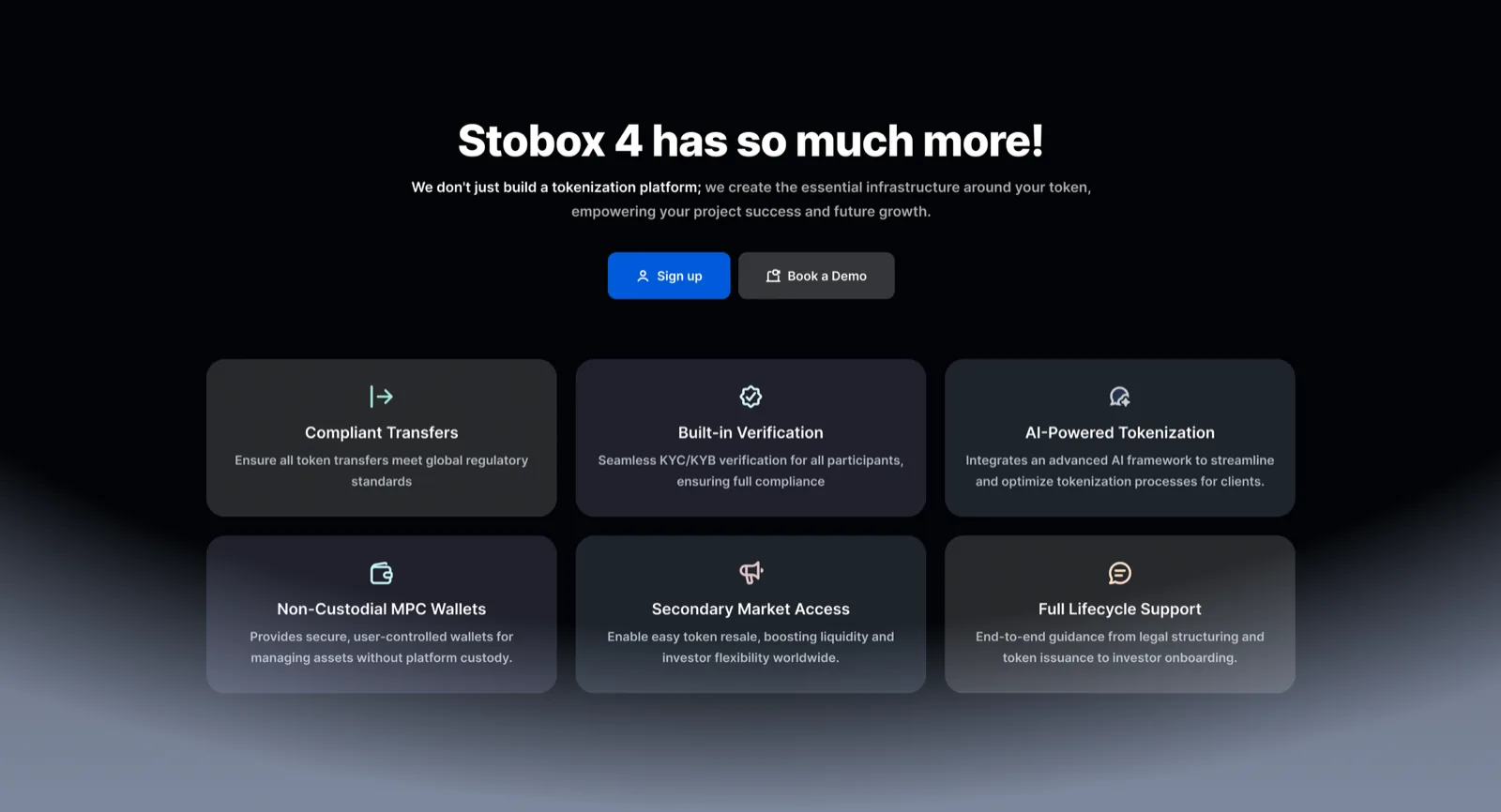
Stobox has supported $305M+ of assets across 100+ clients since 2018. The platform generation described in earlier editions of this guide (Stobox 4) has been retired; the current stack splits the journey into three products that are sold separately and used together, at flat published fees – never a percentage of the raise. Stobox is a non-custodial technology provider, not a broker-dealer, investment adviser, custodian or law firm.
Step 1 – Organize: Stobox Intelligence
Tokenization fails on messy records more often than on technology, so the work starts with the property’s record: title, valuation, encumbrances, leases and income history, ownership and the governing agreements, organized into one verified company record. Stobox Intelligence builds that record against a register of 900+ questions, marking each answer from T0 (your word) to T5 (issued by an authority), so every counterparty – investor, counsel, broker – reads the same verifiable file. Starting the record is free; Intelligence Core is $499/mo when you need the full register.
Step 2 – Raise: Stobox Raisable
A Stobox Raisable window ($1,499–$6,999 flat) prepares the offering from that record: exemption strategy for your investor base (typically Reg D 506(c) for verified US accredited investors, paired with Reg S offshore), the full offering document package, filings and a data room finalized to broker-acceptance standard. With a mint-only platform this document work goes to a law firm at $50,000–$200,000+; here it is included in the flat fee. Regulated sales route through licensed broker-dealers.
Step 3 – Tokenize: Stobox Compass
Going fully on-chain in Stobox Compass is a flat $1,248. Security tokens are issued primarily on Base, an Ethereum Layer 2, with Arbitrum, Canton and other EVM networks also supported. Eligibility, lock-ups and jurisdiction limits are enforced at the token transfer layer – Stobox backs the ERC-7943 (uRWA) standard, Final as Ethereum’s RWA standard since May 2026 – so a private placement stays private after issuance, and the cap table becomes a live on-chain register.
The implementation sequence
The method behind all three products is the 8-phase Stobox Tokenization Framework – 48 steps from strategy to the offering, published in full. Phases one to three (strategy, asset structuring, tokenization model) decide how long everything else takes; most delays trace back to a fact nobody can source, which is why the record comes first. For the property-specific walk-through, see how to tokenize real estate, step by step.
What it costs, all-in
For a typical single-jurisdiction raise: about $10K–$90K all-in when the platform prepares the offering documents, versus roughly $50K–$720K when a mint-only platform leaves them to counsel (third-party ranges researched July 2026 for the tokenization cost index). External either way: entity formation ($110 in Delaware to ~$4K in Cayman), an independent appraisal if required ($5K–$50K+), per-investor KYC ($2–$8), and the broker-dealer’s fee on a routed raise.
The 2026 market and regulatory picture
The rails became regulated reality between December 2025 and July 2026. The SEC’s staff statement of 28 January 2026 settled that a security’s technological format does not alter its legal character; the SEC approved Nasdaq’s rule change to trade tokenized listed securities in March 2026 (CoinDesk); and tokenized real-world assets reached $33.5B of on-chain value by July 2026, referencing $369B of underlying assets (rwa.xyz). In real estate specifically, Dubai’s Land Department is targeting $16B of tokenized title by 2033, with a first $5M secondary market live since February 2026 (CoinDesk). The honest counterweight: 56% of reported tokenized-asset value sits idle by one mid-2026 analysis (thirdweb) – liquidity is engineered per asset, never automatic.
Questions, answered
What replaced Stobox 4?
Three products used together: Intelligence organizes the company into a verified record (900+ questions, answers tiered T0–T5), Raisable prepares a broker-acceptance-grade offering ($1,499–$6,999 flat, documents included), and Compass issues the security token ($1,248, primarily on Base, ERC-7943). Flat fees, never a percentage of the raise, non-custodial.
How long does a real estate tokenization take?
The on-chain part is measured in days; the calendar is decided by phases one to three of the framework – strategy, asset structuring and the tokenization model. A clean, reconciled property record shortens everything; a messy one is the single biggest cost and delay multiplier, whoever does the work.
Do I still need my own lawyer?
The Raisable fee includes the offering document package prepared by Stobox specialists to broker standard, so outside counsel is not required to produce the offering – but an independent legal opinion and sign-off is good practice. Bring your own attorney into the project for $299/mo, or Stobox will match you to a vetted firm.
Which blockchain should a property token use?
Stobox issues primarily on Base, an Ethereum Layer 2 that inherits Ethereum-anchored settlement at cents per transfer, with Arbitrum, Canton and other EVM networks supported for mandates that require them. The chain holds the ownership record for the life of the asset, so settlement assurance and longevity matter more than a launch-week gas quote.
The property data behind the token
An oracle carries property data onto a chain; it does not check whether that data is true. What makes a tokenized property checkable is the record underneath the token: every fact about the building and its financing tied to the document that proves it, and to the party who confirmed it. The infrastructure for connecting property data to tokenized real estate is therefore two layers. First the record, then any feed that publishes from it.
Property data: what the token rests on
Title, liens, the vehicle that owns the property, its value and its condition. These change slowly, but each one has a date, and a token sold against a two-year-old appraisal or an unchecked lien search carries that risk to every holder.
Loan data: what a lender reads
If the property carries debt, the balance, the rate, the maturity and the covenants belong in the same record. A breach of a loan-to-value covenant changes what a token holder owns, so it cannot live only in the lender's system.
Who confirms each fact
Most of this is confirmed by parties who already exist: registries, appraisers, accountants, lenders. The work is collecting their documents in one place and recording who confirmed what, and when.
| Data | Source document | Who verifies it |
|---|---|---|
| Title and ownership | Title deed or land registry extract | Title company or conveyancing lawyer |
| Liens and encumbrances | Registry extract and lien search, dated | Title company |
| Who owns the property vehicle | SPV formation documents and share register | Corporate lawyer or transfer agent |
| Value | Independent appraisal report, dated | Licensed appraiser |
| Physical condition | Building survey or inspection report | Surveyor or engineer |
| Rent roll and occupancy | Leases, rent roll, bank statements | Accountant, reconciled to the bank |
| Income and expenses | Financial statements | Accountant or auditor |
| Insurance | Policy schedule | Insurance broker |
| Loan balance and terms | Loan agreement and lender statement | Lender or loan servicer |
| Covenants such as loan-to-value | Loan agreement and compliance certificate | Lender, with the borrower's accountant |
What a buyer should ask to see
Before buying a real estate token, ask for the document behind each row above and the date it was last checked. A sponsor who can answer from one current record is ready to be diligenced; one who has to assemble it is not yet. Stobox builds that record as a verified company record, and the structure that holds the property is covered on real estate tokenization.
How is the data behind a tokenized property verified?
Not by the token and not by the oracle. Each fact is tied to the document that proves it, such as a registry extract, an appraisal or a lender statement, and to the party that confirmed it. The token and any data feed then point to that record.
What does an oracle do for tokenized real estate?
It carries data from outside the chain onto it, for example a valuation or a rent payment. It does not check whether that data is true. If the input is wrong, the oracle publishes a wrong number faithfully.
What should a buyer of a real estate token ask to see?
The title and lien search for the property, the documents showing the vehicle owns it, a dated appraisal, the rent roll against bank statements, the loan agreement if there is debt, and the date each of these was last checked.
Conclusion
Real estate tokenization represents a fundamental transformation in property ownership, powered by advanced blockchain platforms that convert complex technology into accessible, institutional-grade solutions. By converting physical properties into digital tokens, we're creating unprecedented opportunities for fractional ownership, global access, and automated management that surpass traditional real estate participation limitations.
The technology has evolved beyond experimental phases into proven real-world applications across diverse markets and property types. From the $30 million Manhattan luxury condo tokenization to the €6.5 million Paris villa and innovative community-driven projects, the technology demonstrates value through sophisticated infrastructure that addresses complex requirements of modern real estate markets.
Success requires careful attention to regulatory compliance, security implementation, and realistic expectations about market development, all addressed by advanced platforms like Stobox that provide automated compliance monitoring, enterprise security, and comprehensive market development tools through proven methodologies and professional expertise.
For property owners, tokenization offers innovative capital-configuration opportunities and methods to unlock value from illiquid assets through turnkey solutions that eliminate traditional barriers while maintaining professional-grade compliance and security standards throughout project lifecycles.
For participants, tokenization provides access to previously exclusive opportunities with lower barriers to entry, enhanced transparency, and sophisticated portfolio management tools that rival institutional-grade systems while enabling global diversification and improved liquidity potential.
For the broader real estate market, tokenization promises greater efficiency, transparency, and global connectivity through automated smart contract execution, real-time settlement capabilities, and direct integration with existing financial infrastructure that transforms how property markets operate.
The transformation is accelerating, and tokenization will play a central role in the future of real estate ownership – not as replacement for traditional systems, but as powerful enhancement that makes markets more accessible, efficient, and globally connected through innovative technology and comprehensive platform solutions.
Ready to explore how advanced real estate tokenization can benefit your property development or asset management strategy? Start your tokenization journey with expert technical guidance tailored to your specific needs and objectives, using advanced technology that's shaping the future of real estate markets.
Disclaimer: Stobox is not a broker-dealer, advisor, or law firm. Templates are technical drafts only and must be reviewed by licensed professionals in the client's jurisdiction.
This comprehensive guide represents current best practices in real estate tokenization as of 2025. Regulatory requirements and technical capabilities continue evolving rapidly. Always consult with qualified legal and technical advisors before beginning any tokenization project.
Next steps
What to do with this
- Readiness ScoreCheck where your own asset stands, 25 questions.
- Record Gap CheckPaste your data room index and see which of the 36 facts a counterparty asks for first are missing.
- Founder Office HoursAsk Gene Deyev directly, live on Zoom, Mondays 1 PM ET and Thursdays 2 PM ET.
- Real estate with StoboxWhat a property has to prove before it can be issued: title, valuation, encumbrances, custody and structure.
Get the next one by email
One email when something is actually finished. No schedule, and this page stays open whether you subscribe or not.
You are on the list.
Every email carries an unsubscribe link, and using it removes you immediately.
