Hold metal in a vault, or produce it? Here is how it becomes something an investor can check.
If you sit on metal in a vault, or run a producer, and you want outside money, the first question is never about price. It is where the metal is, who counted it, and who answers if it moves. This page is what we do about that.
$305M+ in assets structured and supported · 100+ companies · 20+ countries · founded 2018
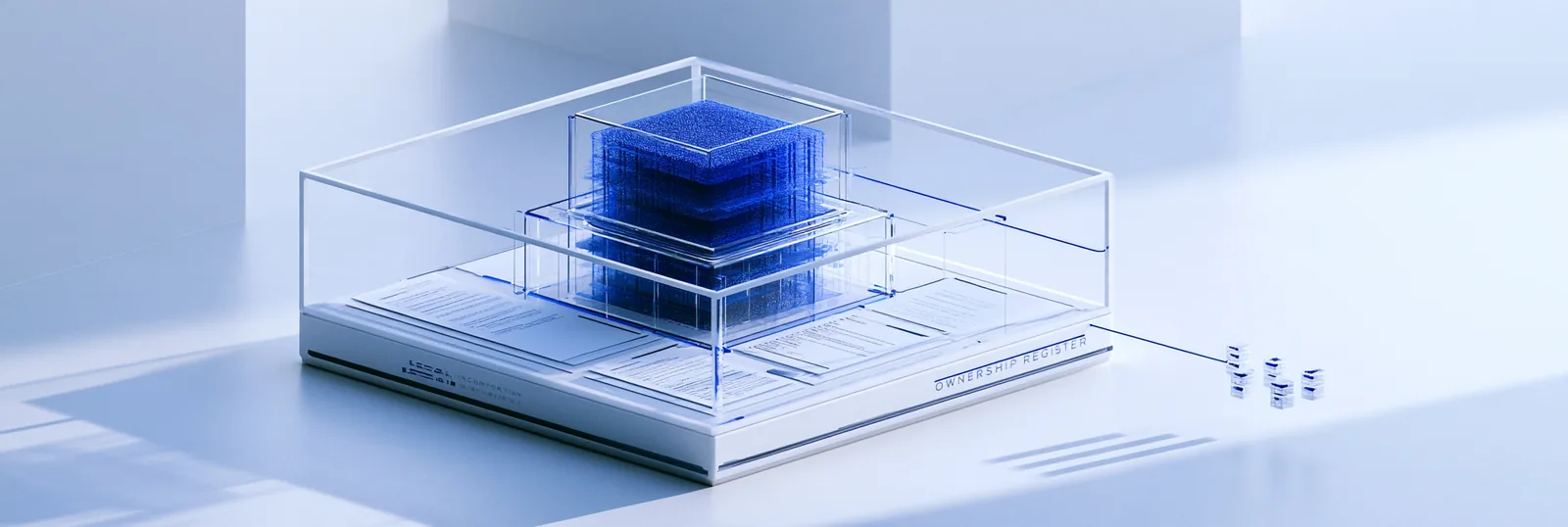
For miners, refiners and anyone holding metal in a vault
What mining and commodity tokenization changes for you.
Not a demonstration of what we can do. Four things you can do with a commodity position once the record, the raise and the token are in place.
Raise money against metal you hold, instead of selling it
Where it is, how pure it is and who insures it become signed statements from outside parties, so a buyer can check without a visit.
Sell ownership in fractions while the metal never moves
Thirty investors, one position, one register, every claim traceable to the same evidence.
Let the vault speak for you
The vault's signed statement sits in the asset's own file, with the date and the name of who signed it.
Know where you stand in about eight minutes
Twenty-five questions, a score, and the list of what is missing. Free, and nobody calls you.
Your problems, and what we do about them
Why mining and commodity tokenization is slow today, and what fixes each problem.
Written in the owner’s words. If yours is not on the list, the readiness score will find it in about eight minutes, and nobody calls you.
Investors ask where it is before anything else
The vault statement, the assay and the insurance go into the record with the name of whoever signed each one.
A buyer reads the custodian’s own words, not your summary of them.
The assay was done in-house
The record shows how strong the evidence behind every assay is, and names the gap. A licensed laboratory’s result sits at the top.
An assay the buyer’s lawyer accepts on the first read.
Metal, company and buyers sit in three countries
The rules about who may hold it are written into the instrument and checked every time it moves.
No investor is admitted who cannot lawfully hold it.
Intelligence · the record
Due diligence for a mining or commodity asset: why you would use Intelligence.
Because on a commodity, the evidence is the asset.
Every claim carries the name of whoever signed it
The vault’s statement, the laboratory’s assay, the insurance certificate and the sales contract each enter the record with their issuer attached. A licensed laboratory counts for more than a figure you typed in yourself, and the record never pretends the two are equal.
The gaps surface before a buyer finds them
Insurance that lapsed, an assay older than the last delivery into the vault, storage fees left unpaid. Found in your own record it costs an afternoon. Found in the buyer’s, it costs a discount.
Your books and the metal agree
What the accounts say you produced, next to what the vault says it is holding. The two numbers are reconciled once, instead of being argued over in every diligence.
An example, made up for this page. Say you hold two hundred kilos of refined gold in a bonded vault, a warehouse where goods sit under customs control, and you want outside capital. You upload the vault statement, the last assay, the insurance certificate and the storage agreement. The record shows the assay is older than the last delivery in, and the insurance covers less than the metal is worth today. You fix both before an investor reads a word. How Intelligence works
Raisable · the raise
Raising capital for a mining or commodity asset: why you would use Raisable.
An example, made up for this page. Say a mid-size producer wants to raise against metal already in the vault rather than sell it at today’s price. The package describes the material, the custody and the insurance, and names the party that attested each fact. An investor who reads it can telephone the vault and check for themselves.
The offering is written from what has already been signed
The memorandum, the subscription agreement and the risk factors are drafted from the custody and assay evidence already in the record, so the buyer’s lawyer checks a document rather than writing to ask for one.
The countries involved decide the shape of it
Where the vault sits, where the company sits and where your investors sit decides which exemption applies, the rule that lets you sell privately without registering a public offering. Your lawyer picks it. We prepare the package to that standard.
A flat fee for the window, never a percentage
You pay for a dated raise window. A licensed broker-dealer runs any regulated sale and any commission is theirs, on their paper. Ours is the same whether you raise one million or ten.
Compass · tokenization
How mining and commodity tokenization works, and why it makes sense.
Because ownership should move without the metal moving.
-
Small pieces of a bar that never leaves
Ownership of a stored position changes hands in fractions while the material stays exactly where it is, and every claim on it traces back to the same record.
What you get
Ownership that moves in small pieces while the bar stays in the vault.
-
The vault signs again, and you can see the date
Each custody and assay statement is dated and attributed, and sits in the asset’s own file. A buyer in year two reads the same evidence the first one did, and can see how old it is.
What you get
A file a buyer reads instead of a call they have to make.
-
Who may hold it is a rule, not a policy
Country limits and eligibility are written into the token and checked every time it moves, so a counterparty who may not receive it simply cannot. There is a path to secondary trading through licensed venues, and the decision to list rests with the venue.
What you get
Country limits the asset itself enforces.
An example, made up for this page. Say the position is held by thirty investors across two countries. A buyer in a third country can receive it only if the rules admit that country, and the contract is what checks, rather than an email chain. The vault re-signs each quarter and the date lands in the file, so nobody has to ask how current the evidence is. How Compass works
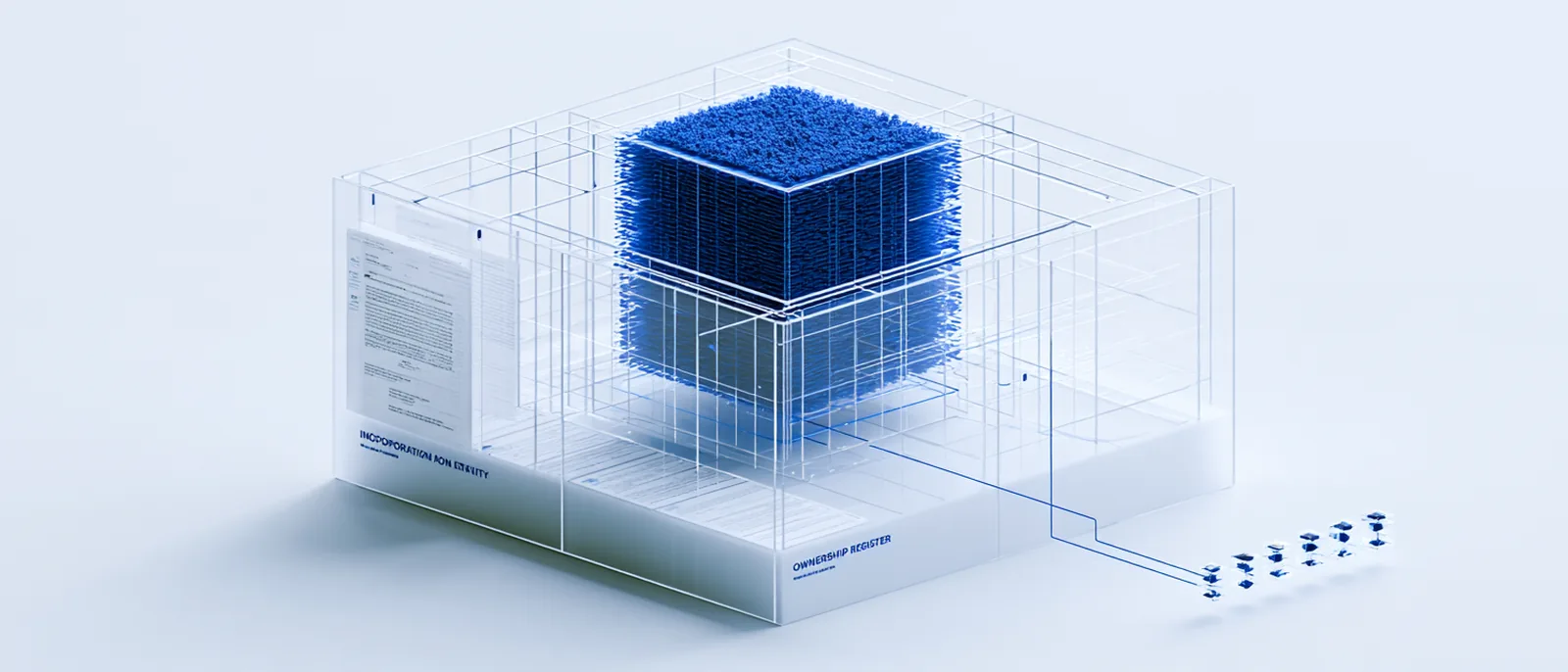
Side by side
Mining and commodity tokenization side by side: the same four questions, before and after.
Nothing here needs the rest of the page. If the right column is not worth the work to you, the answer is no, and that is a fine answer.
Proof of custody
A statement you wrote yourself
A statement the vault signed, with a date
Selling a share
The whole position, or a private deal
Fractions, inside the rules, metal unmoved
What a buyer checks
Your word, and a visit
The file, with a name against every claim
Who may hold it
Whoever you vet by hand
Whoever the rules admit, checked as it moves
Our clients
Mining and commodity tokenization case studies: named work, and the marks that go with it.
Metals and mineral rights are one of the older parts of the register. Three engagements are below, and the other names in the sector follow.
Nature's Vault
Singapore · Token structuring
We designed a two-part structure: one part stands for gold still in the ground, the other for a share in the patented mining claims themselves.
What that means for you
Reserves and the rights over them can be financed separately, because they are different risks.
Iberia Gold
Cayman Islands · Fundraising strategy
We supported a tokenized raise for gold mining operations, and designed a gold-backed stablecoin for the phase after it.
What that means for you
The raise and what the metal becomes afterwards are planned as one sequence.
Allegiance Capital Fund
United States · Token structuring
We structured mineral and royalty interests from oil and gas extraction as a security token that shares revenue with the people who hold it.
What that means for you
A share of production can be sold without selling the ground it comes from.
Our clients in this sector





Every name here is published with the client’s agreement on our case studies. Deal sizes, terms and returns are not ours to publish and are not here. The rest of the client list is private, and we will introduce you to the ones closest to your situation when we speak.
In plain English
Mining and commodity tokenization terms: six words this page uses, in plain English.
You do not need any of this to talk to us. It is here because these words get used at you in meetings, and knowing them is worth more than nodding along.
Assay
A laboratory test of how much metal is actually there and how pure it is. An in-house test is an opinion; a licensed laboratory has a licence to lose.
Custody, or vault statement
A signed statement from the vault confirming what it is holding for you. Not the same document as one you write yourself, and buyers know the difference.
Offtake agreement
A contract with a buyer who agrees in advance to take what you produce. It turns a mine into a predictable stream of money.
Attestation
A dated statement of fact signed by a named outside party, such as a vault or a laboratory, attached to the record so a buyer can read it without asking you.
Passport
The asset’s own file: every claim about it, the document behind each claim, and who signed that document. A buyer reads it instead of asking you for a pack.
Beneficial owner
The actual human being who ends up with the money. Rules on sanctions and money laundering apply to that person, not to the company in front of them.
What you will be asked for
Documents needed for mining and commodity tokenization, and who has to have issued them.
Every answer in the record carries its document and a proof tier from T0 to T5. A number you typed and a number from a registry both get in, and they are not stored as though they were equal.
Vault or custody statement
T4Signed by the custodian
Assay from an outside laboratory
T5A licensed laboratory
Storage and insurance agreement
T4Signed by the other side
Sales or offtake agreement
T4Signed by the other side
Accounts showing what you produced
T3Your books
Where this usually stops: stage 02 · Record. Custody, assay and storage evidence carry the entire proof tier. The six stages are on the Compass page. T5 is issued by an authority, T4 is signed by the other side, T3 is your accounting system of record; anything asserted without a document sits at T0, and the score will say so.
When this is not for you
When mining and commodity tokenization is not for you: three cases, in advance.
Said here so you can leave without a call. It is cheaper for both sides than discovering it in week six.
Metal you have not yet taken into storage.
An estimate of what is in the ground, standing in for metal you can point at.
Owners we cannot identify, or a sanctioned country. Declined before any commercial conversation.
Primary sources: Regulation S-K, subpart 1300 - mining property disclosure – 17 CFR 229.1300 · Regulation D, Rule 506 – 17 CFR 230.506.

Three steps to a call
Find out where a commodity position stands.
Start with the score, ask the founder if you want to, then bring it to a call. Prefer email? info@stobox.io.
Score your asset
The Readiness Score: twenty-five questions across seven dimensions, about eight minutes, no email to see the result.
Take the Readiness ScoreAsk the founder, live
Founder Office Hours with Gene Deyev: 40 minutes on Zoom, Mondays 1 PM ET and Thursdays 2 PM ET.
Join Founder Office HoursBook a call
Bring the asset and the score. We will say what is missing, and say so if the answer is no.
Book a call
Stobox Technologies Inc. Nothing on this page is an offer to sell or a solicitation to buy any security, and nothing here is legal, tax or investment advice. Stobox is not a broker-dealer and not a law firm; regulated activity runs through licensed firms and listing decisions rest solely with the venue. All figures are indicative and are confirmed in writing in your quote. See the privacy summary.