Stobox Compass · tokenization
Tokenize assets so they can do what paper cannot.
Most tokenization material describes a destination. This page describes the work: taking an asset with paperwork in three places to a compliant token on a public standard, with an on-chain cap table and a passport that stays current after issuance. For each piece you can see what happens, who signs, what you are left holding, and what stops it cold.
$305M+ in assets structured and supported · 100+ companies · 20+ countries · founded 2018
- ERC-7943 backer
- Contracts open source
- Not a law firm
Why it stalls
Why tokenization projects stall: you cannot plan a route you cannot see.
Boards do not reject tokenization because they dislike blockchains. They reject it because nobody answers four questions in order: what happens first, who has to sign, what do we hold at the end of each step, and where does this stop.
The failure is always the same shape.
Counsel asks which exemption the offering relies on, and the vendor does not know. The vendor asks for the cap table, and the cap table disagrees with the shareholder agreement.
Somebody mints a token in a week, then finds out it cannot legally be transferred to the people who wanted it.
Eighteen months later the asset is where it started, minus the fees.
What you get
What you get from Compass: six things you are left holding.
Not a report about the asset. The asset itself, in a form a counterparty can check without asking you for anything.
A compliant token
On ERC-7943, a public standard, with your rule set compiled into the asset rather than written in a clause.
An on-chain cap table
The register is the asset, not a spreadsheet describing it. Holders, positions and restrictions read from chain state.
An asset passport
Every claim with its source document, its attesting party and its date, published for a counterparty to open.
An issuer console
One surface for the instrument, its holders, its rules and its pending actions, for the years after issuance.
The contracts themselves
Open source, MIT licensed and public. You can read them, fork them and deploy from them without us.
An instrument ready for admission
Ready for admission to regulated markets. Whether any given venue admits it is a matter for that venue and the licensed firms involved.
The product
Tokenization platform for issuers: what Compass actually does.
Six things an issuer does after issuance, and what each one proves about the instrument.
Where the years are spent
The issuer console
One instrument, its holders, its rules, its passport and its pending actions on a single surface. This is where an issuer spends the years after issuance, which is the part of tokenization nobody demonstrates.
Cap table, live
Holders, positions and restrictions, read from chain state.
The register is the asset, not a report about itAsset passport, public view
What a counterparty opens: the instrument, the structure, and every claim with its attesting party and date.
Diligence without a data roomEligibility and transfer rules
The rule set in force: who may hold, from where, under what lock-up, with what caps.
The restriction is a condition of the assetInvestor holding
A holder’s position, the documents behind it, and the rules that apply to them.
Self-custody with an ordinary experienceDistribution
A payment run to holders of record, executed from the register itself.
Corporate actions do not leave the recordAttestation detail
One claim, its source document, its attesting party, its date and its expiry.
A claim is only as good as who signed it
What it enforces
Compliance rules enforced by the token: six that stop being promises.
Your counsel decides which of these apply. Compass turns each one from a clause somebody has to remember into a condition of the asset. This is the whole difference between a tokenized security and a token.
Holder eligibility
An address that has not met the conditions cannot receive the asset. The check happens on transfer, not in a review afterwards.
Jurisdiction limits
Where a holder may be resident, and where they may not, carried by the asset rather than by a policy document.
Lock-ups and holding periods
A date the contract knows about, so a lock-up cannot be forgotten by whoever was keeping the calendar.
Transfer approval
Where a transfer needs somebody’s consent, the asset requires that consent before it moves.
Holder caps and minimums
Maximum holders, minimum tickets, and concentration limits, enforced at the moment somebody would breach them.
Freeze and recovery
The powers ERC-7943 defines for a regulated instrument, with the action itself written into the record.

The life of the instrument
The security token lifecycle: five events, each written down as it happens.
The register and the passport are updated at the moment of the event, not reconstructed later from somebody’s notes.
Issuance
the instrument and its rules go on chain
Transfer
checked against the rule set, then recorded
Distribution
paid to holders of record from the register
Corporate action
authorized by the issuer, then written down
Redemption
the position closes and the history stays
Nothing is quietly replaced. Each event is written into the passport at the time it happens, so a reader in year three can reconstruct what was true in year one, and prove which is which.
Not sure which of the six rules applies to your asset? Eight minutes tells you.
The record, in detail
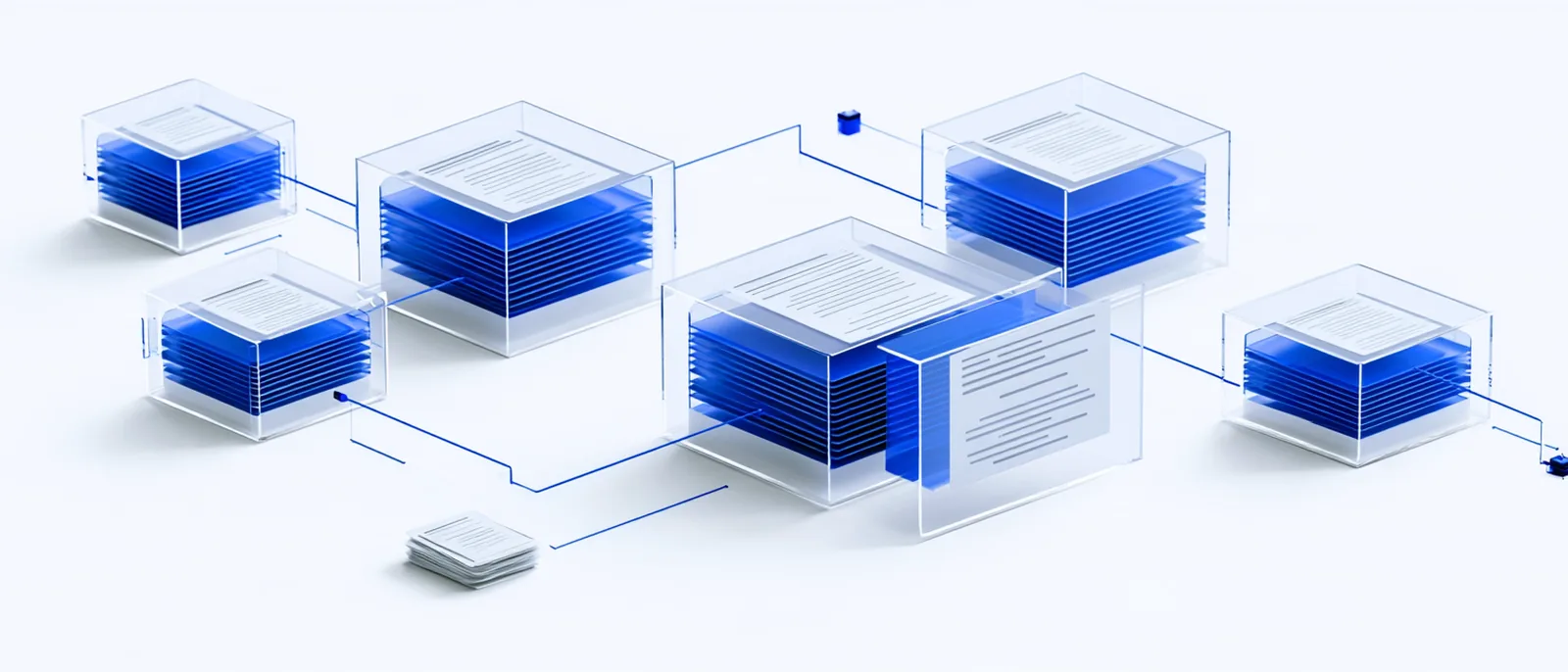
On chain and off chain: the asset and its rules go on chain, the record lives off it.
The record is Stobox Intelligence: every claim about the asset gets a document behind it, an attesting party and a date. Compass then publishes the attestations, not the documents. The canonical record stays where it belongs, and what a counterparty checks is that somebody named stood behind a specific figure on a specific day.
-
On chain
The asset, its rules, its attestations
The instrument, the rule set that governs transfers, the register of holders, and an attestation for each claim, naming who attested and when.
-
Off chain
The canonical record
The documents themselves, held where they already are. Publishing an attestation to a figure is not the same as publishing the contract it came from, and the difference matters to your counsel.
The passport
The asset passport: a counterparty opens one link and stops asking you for things.
Attestations are written with the Ethereum Attestation Service, so each one is a signed statement by a named party rather than a row in our database.
The instrument
What it is, what it represents, which standard it is issued on, and what the holder’s rights are.
The structure
Which entity holds the asset, in which jurisdiction, and under which exemption the offering was made.
The claims
Each fact about the asset with its attesting party, its date, and when that attestation expires.
The history
Every event since issuance, in the order it happened, with nothing overwritten.
The standard
An open token standard, so the rules are not ours to change.
An instrument issued on a standard somebody else can implement is worth more than one issued on a format only its vendor understands.
Backer
ERC-7943, uRWA
The Ethereum standard for compliant real-world-asset tokens. Stobox is a backer of it, and Compass issues on it. It is not ours, which is the point.
Read the standardOurs
STV3 Protocol
Built by Stobox, and one of the implementations of the standard above. The standard is not ours to change; this is, which is why the two are named separately.
Read more about STV3
The exit
What happens to your tokenized cap table if we disappear.
Published in advance, because the question gets asked in every board meeting and the answer is better in writing than in a call.
If we raise the price
The contracts are public under MIT. The token does not check whether an invoice has been paid, because there is nothing in it that could.
If we go away
The factory is published in full, and the standard is not ours to withdraw. Your instrument keeps working with us gone.
If you simply want to leave
You take the contracts, the deployment and the passport history. You lose the attestation, which is the only thing you were buying.
We do not claim this is charity. Open contracts are how we make the attestation worth paying for.
The rails
Tokenization infrastructure: four rails, none of them ours.
Chosen because a counterparty can verify them without our help, and can keep using them if we are not here.

Base
The primary issuance chain. Also Arbitrum and Canton where a counterparty requires it.

USDC
Settlement, so a distribution is paid in something a treasurer recognizes.

Coinbase Smart Wallet
Self-custody with an ordinary sign-in, so the holder holds the keys without holding a seed phrase.

Ethereum Attestation Service
Each claim is a signed statement by a named party, readable without asking us for anything.
Coordinates · assets
Which assets can be tokenized: eight kinds, and where the route bends for each.
An asset type is not an item on a list of things we support. What differs is which part of the work takes the time.
Property
The work is title, encumbrances and the entity that actually holds the building. Once that is settled, a floor sold to forty investors stops being forty side letters and becomes forty positions in one register. Rent reaches holders of record without anyone rebuilding the list first, and a sale of part of the building does not require reopening the whole structure.
Coordinates · regimes
Tokenization regulation: four jurisdictions we prepare instruments for.
The rule set the token carries is written against the regime the offering relies on, which your counsel chooses.
- United StatesReg D 506(b) and 506(c), Reg CF, Reg A+, and Reg S for offshore tranches.
- European UnionThe Prospectus Regulation and MiFID II, and the reliefs commonly used under them.
- United KingdomThe Public Offers and Admissions to Trading Regulations, in force since January 2026.
- SwitzerlandFinSA, under FINMA, and the exemptions for professional and limited-investor offers.
Stobox is not a law firm and not a broker-dealer. Your counsel decides which regime applies, and the regulated sale in each jurisdiction is conducted by a locally licensed firm.
Acceptability
Is a tokenized security compliant? Four tables, and the question asked at each one.
Compliant is not an adjective. It is four separate checks by four parties who do not care about each other’s opinion.
Transfer agent
Who holds the register, and is it authoritative?
The register is chain state, readable by them directly, with the restrictions visible as conditions of the asset.
Bank
What is this instrument, and what settles it?
A security issued under a named exemption by a named entity, settling in USDC, with the terms in the passport.
Regulated market
Can transfers be restricted to admitted holders by the asset itself?
Yes. That is what ERC-7943 defines, and it is why the instrument is ready for admission to regulated markets.
Regulator or auditor
Who checked this, when, and what has changed since?
Every claim carries its attesting party and date, and every event since issuance is in the history.
None of these four has to trust Stobox to complete their check. Everything they need is in the asset, the register and the passport, and all three are readable without us.
Questions
Questions buyers ask before choosing a tokenization platform.
The figures are the ones on the pricing page. Stobox is not a law firm and not a broker-dealer. More answers are on the FAQ.
What does Compass cost for one asset?
A month of Compass is $499 for the platform and the first asset, and $199 for each additional asset. Going on chain is a one-time $1,248: the asset passport at $499 plus contract deployment at $749, with mainnet following the contract audit. For one asset the first year comes to $7,236. Onboarding and verification of the entities and the asset is priced separately, from $4,950. See the pricing page.
Are there hidden setup costs or a percentage of the raise?
No. Our lines are published, and a quote adds only the lines that depend on your structure. What can exceed the sticker is work you pay other firms for (counsel, audit, custody, filings), and the quote names those. There is no success fee and no percentage at any layer; where a commission applies, it belongs to the licensed broker-dealer and appears on their paper.
Can we tokenize an asset without blockchain developers?
Yes. The contracts already exist: Compass issues on ERC-7943 through STV3, the open-source implementation Stobox built, and contract deployment is a priced line rather than a development project. The issuer works in the issuer console, and holders use Coinbase Smart Wallet with an ordinary sign-in instead of a seed phrase. What you still need is counsel, who decides which rules the token enforces.
Does Compass work for a family office or a trust company?
It fits where the family office or trust company is the issuer: an asset held in an entity, with interests issued to its own investors. Property, funds and private equity, and private credit are among the eight asset kinds on this page. Transfer consent, holder caps and jurisdiction limits become conditions of the asset, and the register is current at every transfer, so reporting comes from it rather than from a reconciliation.
Can we tokenize a single property or one SPV?
Yes. Pricing is per asset, so one building is a normal start. The work is title, encumbrances and the entity that actually holds the building; once that is settled, investors hold positions in one register and rent reaches holders of record from it. The SPV tokenization guide covers the structure.
What happens to our token if Stobox goes away?
It keeps working. The contracts are public under MIT and the factory is published in full, so you keep the contracts, the deployment and the passport history, and lose only the attestation. What if the platform disappears walks through it.
How does Compass compare with Securitize, Tokeny, Brickken, DigiShares or Polymesh?
Each comparison has its own page, built from the vendor’s published facts with a date: Securitize, Tokeny, Brickken, DigiShares and Polymesh. If the choice is between a platform and your own stack, read build vs buy; for the questions to ask any vendor, how to choose a tokenization platform.
Securities are increasingly migrating from traditional, or off-chain, databases to blockchain-based, or on-chain, ledger systems.
Paul S. Atkins, Chairman, U.S. Securities and Exchange Commission
Keynote at the Crypto Task Force roundtable on tokenization, 12 May 2025. Read the speech

Where to start
Find out where you can actually start.
Twenty-five questions across seven dimensions. You get a score, and a plain list of what is missing before structuring is even worth discussing.
Prefer email? info@stobox.io.
Talk to the Compass team
Tell us about the asset and get an answer within two working days.
Talk to the Compass teamOr bring the asset itself – thirty minutes, and we will say if the answer is no.
Stobox is not a law firm and not a broker-dealer. See the privacy summary.
Three steps to a call
How to start with Stobox: from a readiness score to a call.
Each step is optional, and you can start at any of them.
Take the Readiness Score
Twenty-five questions across seven dimensions. You get a score and a plain list of what is missing, before anyone talks to you.
Join Founder Office Hours
Forty minutes on Zoom with Gene Deyev, Founder and CEO of Stobox. Mondays 1 PM ET and Thursdays 2 PM ET. Bring your questions.
Book a call about your asset
Thirty minutes on your company and your asset. If the answer is no, we will say so.